
Key Takeaways
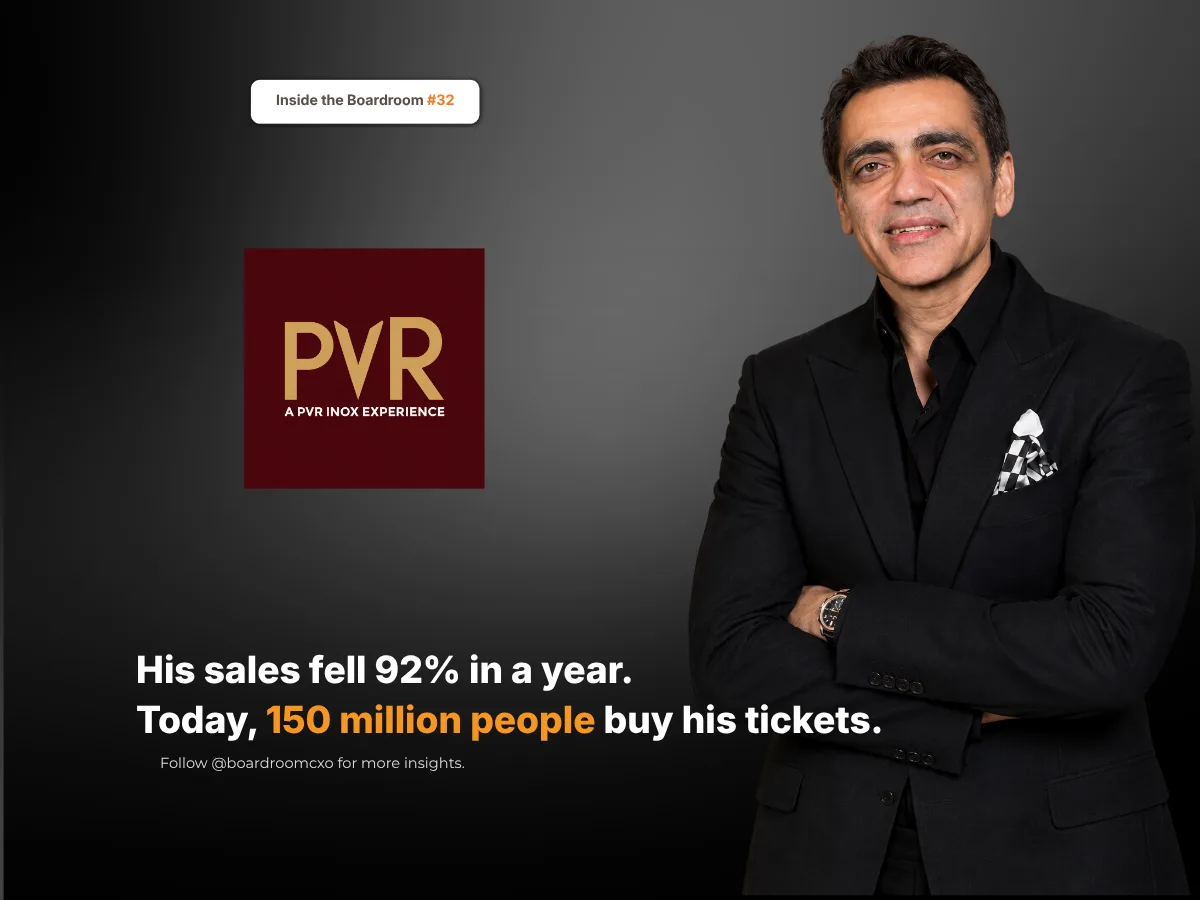
- PVR began shutting its 845 screens across 71 cities on 11 March 2020. In FY21 its revenue from operations fell 92% to about ₹280 crore, and it lost about ₹748 crore.
- Ajay Bijli bet that audiences would come back and made survival the job: fixed costs cut 63%, rent down 79%, ₹1,600 crore of fresh equity and debt, popcorn sold online, and a merger with rival INOX completed in February 2023.
- In FY26 PVR INOX sold 150 million tickets across 1,798 screens and made a net profit of ₹333 crore, helped by a one-time gain from selling its popcorn business. Its average ticket price, ₹280, matched PVR's entire FY21 revenue in crore. Boards should judge a leader in a crisis on whether the business is still standing when demand returns.
In March 2020, India's cinemas were among the first businesses ordered to shut. PVR began closing its screens on 11 March. Within days, almost all of them were dark.
That was 845 screens across 71 cities, with nobody in the seats.
"As a businessman, you can forecast volatility, but you can never forecast a zero-revenue situation," Ajay Bijli told YourStory in May 2020.
What the Shutdown Cost
In FY21, PVR's revenue from operations fell 92%, to about ₹280 crore, from ₹3,414 crore the year before. It lost about ₹748 crore.
And the question hanging over the business was bigger than one bad year. Streaming was booming at home. Would people ever come back to the cinema?
Who Is Ajay Bijli?
Ajay Bijli is the founder and managing director of PVR INOX. He built the business from one ageing cinema: his father's Priya Cinema in South Delhi, which he set about reviving in the early 1990s, refurbishing it, installing Dolby sound and showing Hollywood films.
In 1997, with Australia's Village Roadshow as partner, he opened PVR Anupam in Saket, India's first multiplex.
He had spent more than two decades building that business. In a few weeks, it had stopped earning.
The Bet: Survive Until They Come Back
Bijli bet that audiences would return. So his job was to keep PVR alive until they did.
He cut PVR's fixed costs by 63% in FY21 compared with FY20. Rent alone fell 79%, with landlords agreeing to near-total waivers during the lockdown months. Common area charges fell 42%, and all other fixed overheads 57%.
He raised about ₹1,600 crore of fresh liquidity, ₹1,100 crore in equity and ₹500 crore in debt, to keep cash in the bank.
He even took PVR's popcorn out of the cinema. In August 2021, PopMagic, a microwave popcorn, went on sale on Amazon, after more than three lakh units were sold through cinemas and food delivery apps.
The Merger With INOX
Once theatres reopened, he went further. In March 2022, PVR agreed to merge with its biggest rival, INOX Leisure. The merger was completed in February 2023, creating PVR INOX, with Bijli as managing director.
The logic was survival too. "The balance sheets of both companies got completely hammered in the pandemic and one of the ways to survive and make the companies strong was to merge," he told YourStory in May 2023.
"The last three years have been life altering. We are fortunate to have survived this baptism by fire."
What the Bet Delivered
The recovery was slow. PVR INOX lost money in FY25. But in FY26, it welcomed 150 million moviegoers across 1,798 screens in 113 cities and made a net profit of ₹333 crore, helped by a one-time gain of about ₹195 crore from selling its popcorn business, 4700BC.
One pair of numbers sums it up. In FY21, PVR's entire year of revenue was about ₹280 crore. In FY26, ₹280 was the price of an average PVR INOX ticket.
The Boardroom Lesson: Conviction Needs a Survival Plan
In a crisis that takes revenue to almost nothing, conviction alone does not keep a company alive. Cash does. Bijli's belief that audiences would come back was only useful because he cut costs and raised capital fast enough to still be there when they did.
A crisis can empty every seat. Conviction is what fills them again.
He paired the long-term bet with short-term discipline, and then used the downturn to make the company bigger, not smaller.
Common Mistakes Boards Make in a Revenue Shock
Boards facing a sudden collapse in revenue tend to make the same three errors.
They wait to see how long it lasts. Every week of full fixed costs with no revenue burns cash. PVR's cost cuts and fund-raising came within months, not after the crisis had passed.
They treat the crisis as the end of the business model. Streaming looked like it would kill cinema. The leader's job is to judge whether demand is gone or only paused, and to bet accordingly.
They see a rival only as a competitor. The downturn that weakened PVR also weakened INOX. Merging made both stronger. Crises open doors that are closed in good times.
A Framework for Hiring a Leader for a Crisis
When we brief boards on a CXO search for a business facing a sudden shock, we push for three specific checks.
- Ask how the candidate would protect cash in the first 90 days. The right leader can name the fixed costs to renegotiate and the capital to raise, and in what order.
- Test conviction against evidence. Ask candidates how they decided whether demand would return, and what would have changed their minds.
- Hire a CFO who can raise money in bad times. PVR raised ₹1,600 crore with its screens dark. A finance leader with investor and lender relationships is part of the survival plan.
Why This Belongs in the Boardroom, Not Just the Business Pages
This sits alongside the story we told of Shailesh Chandra at Tata Motors, who took charge of a business at its lowest point a week after the country locked down. And PVR's popcorn brand, 4700BC, was bought by Marico, whose approach to buying young brands we wrote about in Saugata Gupta's story.
Every leader says they believe in the business. The crisis shows who planned to survive long enough to prove it.
Sources
- Business Standard, PVR adds 4 more screens in Indore, March 2020
- YourStory, Why Ajay Bijli of PVR believes theatres will overcome the worst of times, including coronavirus, May 2020
- Business Standard, PVR Q4 net loss widens to Rs 289 cr, June 2021
- ICRA, PVR Limited rating rationale, February 2022
- afaqs, PVR PopMagic microwave popcorn launches on Amazon, August 2021
- YourStory, From 2019's historic highs to the pandemic's baptism by fire: How PVR Cinemas lived and learned, May 2023
- Free Press Journal, PVR INOX swings to Q4 profit of ₹186 crore, FY26 revenue rises 17%, May 2026
- Kotak Neo, PVR INOX Q4 results: film releases help company rebound to profitability, May 2026
Related Reading
Shailesh Chandra Took Over Tata's Cars at Their Low Point. Sales Are Now Nearly 5x.
Read → R · 02 Founder Leadership · November 2026Ashok Vaswani: The RBI Banned Kotak on His 115th Day. He Had It Lifted.
Read → R · 03 Founder Leadership · November 2026Saugata Gupta Bought Founders, Not D2C Teams. Then He Kept Marico Out.
Read →Steering a business through a shock that took its revenue to almost nothing?
We screen for leaders who can cut deep, raise capital and keep their conviction while the numbers say otherwise. Brief us on your next CXO mandate and we will tell you what the market actually has to offer.
Brief Us on a Mandate See all Finance & CFO roles we fill →